
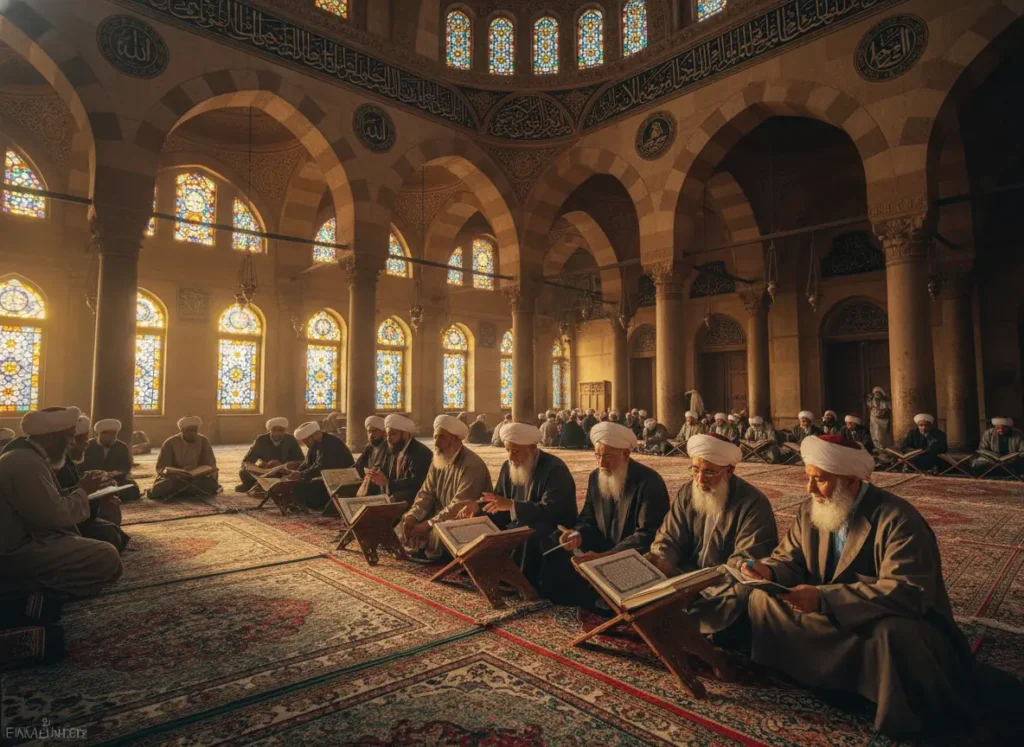
Quran courses give you the structured path, the qualified teacher, and the consistent practice you need to go from “I can’t read a single letter” to reciting with proper Tajweed and understanding what Allah is saying to you. Whether you’re a complete beginner, a parent, an adult learner, or someone who wants to deepen their connection to the Quran — this guide covers everything you need to know in 2026.
What Are Quran Courses — and Why Do They Matter?

Here’s the thing — a lot of Muslims recite the Quran daily without really connecting to it. They make sounds. Beautiful sounds. But the meanings stay hidden.
That’s not their fault. It’s a curriculum problem.
Most people were taught how to recite but never what they’re reciting, and never why the way they’re pronouncing it matters so deeply. Quran courses fix that by addressing all three layers at once.
The Three Pillars of Quran Education
1. Quran Recitation (Qira’ah)
This is your foundation. Before anything else, you need to be able to read Arabic script — recognize letters, connect them into words, and read through verses without stopping to guess.
Most beginners go from zero to basic reading fluency in about 3–6 months. That’s not long. That’s shorter than most people spend watching a single Netflix series.
2. Tajweed — Proper Pronunciation
Tajweed is the system of rules that governs how every letter is pronounced when reciting the Quran. It’s not optional decoration — it’s how the Prophet ﷺ recited, and how the Quran has been preserved for 1,400 years.
Full Tajweed mastery typically takes 12–24 months of dedicated study. But you’ll notice real improvement much earlier.
3. Quranic Arabic — Understanding the Meaning
This is where things get emotional. When you understand what you’re reciting — when you hear “inna ma’al ‘usri yusra” and you know exactly what Allah is promising you — that’s a different experience entirely.
Functional Quranic Arabic comprehension typically takes 18–36 months. But within the first few weeks, you start recognizing words. And each word recognized feels like a small door opening.
Why All Three Work Together
Recitation without Tajweed? You’re making errors that change meanings. Tajweed without understanding? Beautiful sounds with no connection. Understanding without recitation? You’re dependent on translations forever.
All three together = complete Quranic literacy. That’s the goal.
Types of Quran Courses Available in 2026
Not every course is the same. Here’s an honest breakdown of what’s available and who each one is actually for.
Beginner Quran Reading Courses
Who it’s for: Complete beginners who can’t read Arabic script at all.
What you learn: Arabic alphabet through Noorani Qaida, letter joining rules, reading short words, then short ayaat.
Timeline: 3–6 months to read independently.
Outcome: You can open any surah and read it — slowly, but correctly.
Tajweed Certification Courses
Who it’s for: People who can already read but want to recite the way the Prophet ﷺ recited.
What you learn: Makhaarij (articulation points), Sifaat (letter characteristics), Madd (elongation), Noon and Meem rules, Qalqalah, and more.
Timeline: 12–18 months for a complete course.
Outcome: Correct Tajweed recitation. Some courses lead to Ijazah — a formal chain of transmission going back to the Prophet ﷺ himself.
Want a deep dive into Tajweed? The complete guide to Tajweed courses covers every rule and how to learn them systematically.
Quranic Arabic Language Courses
Who it’s for: Those who can recite but want to understand what they’re saying.
What you learn: Classical grammar, Quranic vocabulary (starting with the most frequent 100 words, which cover roughly 50% of the Quran), sentence structure, verb patterns.
Timeline: 18–36 months for solid comprehension.
Outcome: Reading the Quran and understanding directly, without reaching for a translation.
For structured Quranic Arabic training with Al-Azhar certified teachers, explore the Quran online classes at Alphabet Arabic Academy.
Quran Memorization (Hifz) Programs
Who it’s for: Those committed to memorizing the entire Quran or selected surahs.
What you learn: Memorization techniques, revision systems, retention strategies.
Timeline: 2–5 years for full Quran (varies by age and dedication).
Outcome: Hafiz/Hafiza status.
Children’s Quran Courses
Who it’s for: Kids ages 4–16.
What you learn: Age-appropriate Quran reading, basic Tajweed, Islamic values through storytelling and games.
Outcome: A child who grows up with the Quran as a natural part of their identity, not a burden.
For specialized kids’ programs, the Quranic Arabic for kids course is built specifically for young learners with short attention spans and big curiosity.
Islamic Studies Courses
Who it’s for: Learners who want to understand the Quran in context — Aqeedah, Fiqh, Seerah, Hadith.
What you learn: Comprehensive Islamic education that complements Quran learning and deepens your understanding of the deen.
Outcome: A well-rounded Islamic literacy that makes your Quran understanding richer and more applied.
Not sure which course fits your level? Take the free Arabic placement test — it takes a few minutes and gives you a clear starting point.
Why Online Quran Learning Has Changed Everything

Ten years ago, “online Quran class” meant poor audio, a pixelated screen, and a teacher who was basically reading from a textbook. That’s not what it is anymore.
Online Quran education in 2026 is genuinely better than in-person for most students worldwide. Not “better than nothing.” Actually better.
Here’s why.
Access to the Best Teachers — Regardless of Where You Live
If you live in rural Canada, suburban Australia, or a small town in the UK, finding a qualified Quran teacher locally is genuinely hard. Online learning removes that constraint entirely.
A student in Tokyo can now learn from an Al-Azhar graduate in Cairo. A new Muslim in Norway can work with a certified sheikh who holds ijazah. That wasn’t possible a decade ago.
Flexible Scheduling That Actually Works
You don’t have to rearrange your life around a class schedule. You pick the time. Early morning after Fajr, late evening after the kids are asleep, weekends — it adapts.
That flexibility is what makes consistency possible. And consistency is everything in Quran learning.
One-on-One Attention at an Affordable Price
In traditional settings, private one-on-one lessons from a qualified teacher are expensive and rare. Online programs make personal instruction the default, not the exception.
Your teacher hears every recitation. Corrects every mistake. Adjusts the pace to you. That level of attention is what actually creates progress.
Recording, Review, and Progress Tracking
Sessions can be recorded (with permission). Difficult rules can be replayed. Vocabulary reviewed between classes. Digital tracking shows exactly which surahs you’ve covered and which Tajweed rules need more work.
The Cost Difference Is Real
Quality online Quran programs typically cost 30–50% less than equivalent in-person classes. At Alphabet Arabic Academy, Quran Tajweed courses start from $40/month. That’s a fraction of what a private in-person tutor would charge.
The One Thing You Can’t Skip: A Qualified Teacher
You can learn programming from YouTube. You can learn history from a podcast. You cannot properly learn Quran from an app.
This isn’t elitism. It’s the nature of the subject.
Why Self-Study Fails for Quran Learning
Arabic has sounds that simply don’t exist in English, French, Spanish, or most other languages. The ح versus ه. The ع versus أ. The ق versus ك. These distinctions are not subtle — mispronouncing them can change meanings entirely.
Without a teacher correcting you in real-time, you practice the wrong pronunciation until it’s a habit. Unlearning that habit later takes twice as long as learning correctly from the start.
Apps can’t hear you. Books can’t demonstrate mouth positions. AI can’t feel the difference between your ص and your س.
Only a qualified human teacher can do that.
What “Qualified” Actually Means
Ijazah — this is the non-negotiable. A true Quran teacher holds a formal chain of authorization tracing back through their teachers, their teachers’ teachers, all the way to the Prophet Muhammad ﷺ. This 1,400-year chain is how the Quran has been perfectly preserved.
When you learn from a teacher with ijazah, you’re not just getting instruction. You’re connecting to that chain.
Tajweed mastery in practice — not just knowing the rules theoretically, but demonstrating them correctly and teaching them clearly.
Teaching experience — knowing the Quran and teaching the Quran are different skills. Experienced teachers know the common mistakes at each level, how to correct them gently, and how to keep students motivated through the difficult stretches.
Islamic character (Akhlaq) — a Quran teacher is a spiritual role model. Their sincerity, patience, and love for the Quran transfers to students in ways that go beyond rules and recitation.
At Alphabet Arabic Academy, every Quran teacher holds ijazah, is a native Arabic speaker from Egypt, and has been trained specifically to teach non-native learners. You can see the full courses and teacher details here.
Learning Quran as an Adult: It’s Never Too Late
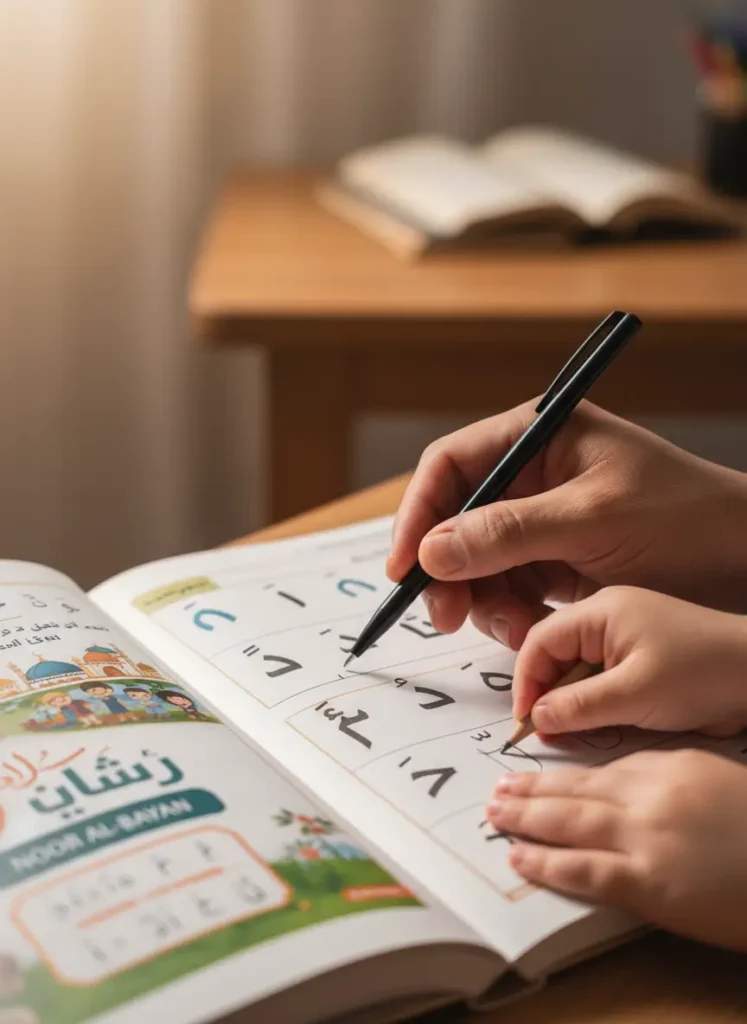
“I’m too old to start.”
This is the most common thing adult Quran learners say before they start. And within six months of starting, it’s the thing they say they’re most glad they ignored.
Adults don’t just can learn Quran — they often learn better than children in key ways.
Why Adults Have Advantages
Motivation is internal. Children learn Quran because their parents send them. Adults choose it. That difference in internal drive is massive for consistency and persistence through challenges.
Life experience enriches the meanings. When you’ve experienced loss, hardship, gratitude, joy — Quranic ayaat resonate at a depth children simply can’t access yet. Adults don’t just learn the Quran. They feel it in context.
Discipline and work ethic. Adults know how to sit down, focus, take notes, and practice. These skills matter more than a young memory.
Common Adult Challenges (and Real Solutions)
“I can’t read Arabic script.”
You don’t need to yet. The Arabic alphabet has 28 letters. With 15–20 minutes of daily focused practice, most adults recognize all letters within 4–6 weeks. Start with Noorani Qaida and a teacher who specializes in adult beginners.
“I don’t have time.”
20 minutes daily beats 3 hours on weekends. Every time. Schedule it like salah — same time, non-negotiable. After Fajr works well for many people. Some prefer after Isha.
“My memory isn’t what it used to be.”
Adult memory is different, not worse. You compensate with better organization, spaced repetition, and context-based learning. Use tools like Anki for vocabulary. Review new material within 24 hours — this one habit dramatically improves retention.
“I feel embarrassed making mistakes.”
A teacher who holds ijazah has heard every possible mistake. They expect it. They’re not judging you — they’re correcting you, which is exactly what you’re paying them to do.
And there’s a hadith worth keeping in mind: “He who recites the Quran and finds it difficult to recite, doing his best to recite it in the best way possible, will have two rewards.” (Sahih Bukhari)
Your struggle is not a failure. It’s a doubled reward.
Teaching Quran to Children: Building a Lifelong Foundation
Children who grow up with the Quran don’t just memorize verses. They build an identity.
The relationship a child forms with the Quran in their early years shapes how they relate to Allah, to prayer, to the Arabic language, and to their Muslim identity through every stage of life. That’s not an exaggeration — that’s what we see consistently with students.
Why Childhood Is the Ideal Time
Young children acquire Arabic sounds naturally. The letters that adults struggle with for months — the ع, the ح, the ق, the ض — children’s tongues adapt to these sounds with remarkably little resistance. This phonological flexibility doesn’t last forever.
Memory also works differently in children. They retain recited content faster and longer than adults. A child who memorizes Juz Amma at age 8 will likely carry those surahs for life.
Age-Appropriate Learning Structure
Ages 4–6: Introduction phase. Focus on alphabet recognition, positive associations with the Quran, and 10–15 minute sessions that feel like play. The goal isn’t mastery — it’s love.
Ages 7–10: Foundation phase. Structured Noorani Qaida reading, Tajweed introduction, short surah memorization. 30-minute sessions with an engaging teacher who knows how to work with young learners.
Ages 11–14: Development phase. Systematic Tajweed study, longer surah memorization, beginning to connect meanings. This is where children can start understanding what they recite in salah.
Ages 15–18: Advanced phase. Full Quran reading with Tajweed, Quranic Arabic introduction, potential Ijazah preparation for motivated students.
Making Quran Genuinely Engaging for Kids
Gamification works. Star charts, small rewards for surah completions, friendly family competitions — these aren’t bribes. They’re age-appropriate motivation.
Storytelling works even better. Connect Quranic verses to Prophet stories. Make the characters real. Children who know why a surah was revealed remember it completely differently from children who only memorize sounds.
Technology helps too. Quran apps with child-friendly interfaces, animated stories, interactive Tajweed tools — these supplement class time rather than replacing it.
What Parents Should Avoid
Don’t force without joy. A child who associates Quran with punishment and pressure may spend their adult life avoiding it. Short, positive sessions consistently beat long, resentful ones.
Don’t compare to other children. “Ahmed memorized 10 surahs and you only know 3” does exactly nothing except damage your child’s relationship with the Quran.
Don’t make it a transaction. The moment Quran becomes “you can’t play until you finish your Quran” it starts losing its sacredness. Quran should be associated with warmth, love, and connection — not as a gate blocking something else.
Quranic Arabic: Understanding Without a Translation
Imagine opening the Quran and just… reading it. No translation needed. No going back and forth between Arabic and English. Just understanding directly.
That’s what Quranic Arabic gives you.
Why Quranic Arabic Is Different from “Regular” Arabic
This surprises a lot of people. Learning Egyptian Arabic doesn’t help you understand the Quran. Learning Modern Standard Arabic helps somewhat but isn’t enough. The Quran was revealed in 7th century classical Arabic — a specific register that has unique vocabulary, grammar structures, and literary devices not found in modern Arabic dialects.
You need to study it specifically. But here’s the good news: the Quran uses roughly 1,800 unique root words. That’s a manageable vocabulary. And the top 100 most frequent Quranic words cover about 50% of the entire text. Master 500 words and you understand roughly 70%.
The vocabulary learning curve is steep at first, then it accelerates dramatically.
The Learning Progression for Quranic Arabic
Phase 1 — Foundation (Months 1–6): Arabic alphabet and reading, basic grammar (subject, verb, object), top 100 Quranic words, simple ayat analysis.
Phase 2 — Building (Months 7–12): Intermediate grammar, particles, prepositions, pronouns. Top 500 words. Verb conjugations. Beginning to understand full verses independently.
Phase 3 — Fluency (Months 13–24): Advanced grammar, top 1,000 words, reading without translation for most verses, independent study of any surah.
Phase 4 — Mastery (Month 24+): Complete grammar mastery, Tafseer study in Arabic, ability to teach others.
Quranic Arabic vs. Modern Standard Arabic
If your only goal is understanding the Quran — learn Quranic Arabic. Don’t spend time on modern Arabic that won’t help you get there.
If you want broader Arabic literacy — learn MSA alongside Quranic Arabic. They complement each other.
If you want to have conversations — learn a dialect (Egyptian is the most widely understood). But don’t expect dialect study to help your Quran comprehension.
The strategic approach: Quranic Arabic first, then add MSA if you want to read broader Islamic scholarship, then add a dialect if you want spoken communication.
Tajweed Deep Dive: Reciting as the Prophet ﷺ Recited
Tajweed isn’t advanced decoration. It’s not just for scholars or reciters who compete in tournaments.
It’s for every Muslim who recites the Quran. Because the Quran says: “And recite the Quran with measured recitation (tarteel)” [73:4]. The Prophet ﷺ demonstrated what tarteel sounds like — and Tajweed is the systematized version of that.
Why Tajweed Matters More Than Most People Think
Here’s a concrete example.
- قَلْب (qalb) = heart
- كَلْب (kalb) = dog
Mispronouncing the ق as a ك changes “heart” to “dog.” That’s not a minor accent issue. That’s a completely different word.
Tajweed prevents distortions like this. It’s how the Quran has been protected — not just written in text, but preserved in sound, in the exact way it was revealed.
Core Tajweed Concepts
Makhaarij al-Huroof — Articulation points. Every Arabic letter has a specific position in the mouth or throat where it’s correctly produced. Learning these isn’t theory — it’s physical training.
Sifaat al-Huroof — Characteristics of letters. Heavy vs. light, voiced vs. voiceless, strong vs. weak. These qualities affect how letters sound in different contexts.
Ahkaam al-Noon as-Sakinah wal-Tanween — Four rules governing the noon with sukoon and tanween: Idhhar (clear), Idghaam (merging), Iqlaab (changing to meem), Ikhfaa (hiding/nasalization).
Ahkaam al-Meem as-Sakinah — Three rules for the meem with sukoon.
Ahkaam al-Madd — Elongation rules. When and for how long specific letters (ا، و، ي) are stretched, based on what follows them.
Qalqalah — The bouncing echo sound for five letters: ق، ط، ب، ج، د. Get this wrong and your recitation sounds flat and lifeless.
How to Learn Tajweed Effectively
Start by listening. Before touching a single rule theoretically, immerse yourself in recitations by master Qaris. Sheikh Mishary Rashid Alafasy, Sheikh Abdul Rahman Al-Sudais, Sheikh Mahmoud Khalil Al-Hussary — listen until your ear starts recognizing how the Quran is supposed to sound.
Then learn systematically. One rule at a time. Apply it immediately in recitation. Get corrected by a teacher in real-time. Move to the next rule only when the previous one is automatic.
Use a color-coded Tajweed Quran. These show each rule visually while you recite, making the connection between theory and practice much faster.
Don’t rush the timeline. Students who try to absorb all Tajweed rules in two months end up knowing the names of the rules without being able to apply them. Students who spend a week on each rule, practicing daily, end up with Tajweed that’s genuinely part of how they recite.
Online Quran Courses for Kids: What to Look for in 2026

The online Quran class market for children has expanded enormously. That’s mostly good news — more options, more competition, better quality. But it also means more noise.
Here’s what actually matters when choosing an online Quran program for your child.
Short Sessions, High Energy
Children can’t maintain focus for 60-minute classes. The best programs for ages 4–10 run 20–30 minutes per session. Sessions are packed and interactive — no time to zone out.
Qualified children’s Quran teachers know how to shift activity type every 5–7 minutes. Recitation, then a quick game, then listening, then review. The cognitive variety keeps engagement high.
Teachers Trained for Children
A teacher who is excellent with adults can be disastrous with children. Teaching children Quran requires specific skills: reading the child’s energy, transitioning smoothly between activities, using praise strategically, knowing when to push and when to ease off.
Islamic Studies Integration
The best children’s Quran programs don’t just teach recitation in isolation. They connect each surah to its story, its meaning, its application in daily life.
A child who knows why they’re memorizing Surah Al-Ikhlas — who knows it’s about Allah’s oneness and they can explain it in their own words — has a completely different relationship with it than a child who can recite it perfectly but has no idea what it means.
For this reason, combining Quran courses with Islamic Studies from an early age creates a much stronger foundation.
Consistency Over Intensity
Three 25-minute sessions per week beats one 90-minute session. Every time. For children especially, the rhythm of regular, short contact with the Quran is what builds the habit. Habit is the goal. Memorization and reading ability follow naturally from the habit.
Arabic and Islamic Studies: The Bigger Picture

There’s a version of Quran learning that stays purely technical — correct pronunciation, proper Tajweed, smooth reading. That’s genuinely valuable.
But there’s a deeper version. And it requires understanding Arabic and Islamic Studies together.
Why Arabic Study Unlocks the Quran Beyond Translation
Every translation of the Quran is an interpretation. The translator makes choices about which meaning to emphasize, which nuance to preserve, which literary device to explain or ignore. Even excellent translations lose something.
When you read the Quran in Arabic — even partially, even slowly — you access something translations can’t give you. The specific word Allah chose over a synonym. The rhythm of a verse. The way a concept builds across multiple surahs. The literary devices that make an ayah resonate in a way that no English sentence can fully replicate.
This is why Quranic Arabic isn’t just useful for scholars. It’s spiritually transformative for ordinary Muslims too.
Islamic Studies as Quran Context
Understanding the Quran properly requires knowing when and why verses were revealed. The science of Asbab al-Nuzool (reasons of revelation). The context of the Prophet’s ﷺ life. The progression of Islamic rulings over time.
Combining Quran courses with Islamic Studies — Aqeedah, Fiqh, Seerah, Hadith — doesn’t slow your Quran learning down. It makes everything you’re learning click.
At Alphabet Arabic Academy, Islamic Studies courses are available for both adults and children, designed to complement Quran and Arabic study as part of a complete curriculum.
10 Ways to Stay Engaged with the Quran Between Classes
Classes are where you learn. But what you do between classes is where you improve.
Here’s what actually works.
1. Listen daily to a Qari you love. Twenty minutes while commuting, cooking, or before sleep. Your ear trains your tongue.
2. Read with a word-by-word translation app during your personal recitation time. Not to replace Arabic learning — to accelerate vocabulary acquisition.
3. Recite in salah what you’re currently learning. This creates immediate stakes. You don’t just memorize for a teacher — you memorize for your prayer.
4. Track a streak. Use a simple calendar or app. Mark every day you recite or practice. Don’t break the chain. Even five minutes counts as the chain unbroken.
5. Learn one new Quranic word per day. Just one. Write it. Say it. Find it in a verse. In one year, you’ll have over 300 words — covering the majority of the Quran’s most frequent vocabulary.
6. Join an online Quran community. Accountability, encouragement, shared resources. The people around you shape your habits more than any app.
7. Use a color-coded Tajweed Quran. Even outside class, reading with color-coding reinforces rule recognition passively.
8. Memorize short surahs in order, starting from Juz Amma. Even if you don’t intend to become a hafiz, having Juz Amma fully memorized transforms your prayer life.
9. Connect meanings to your life. When you read a verse about patience, think of something in your own life that requires patience right now. The Quran stops being abstract and starts being personal.
10. Don’t skip review. New content is exciting. Review feels tedious. But forgetting what you’ve learned is the single biggest progress killer in Quran study. Review old material every session, even briefly.
Common Mistakes When Choosing Quran Courses
People make the same mistakes when choosing a Quran course. Here’s how to avoid them.
Choosing based on price alone. A $5/month platform is not a deal if the teacher has no ijazah, uses pre-recorded videos, and can’t hear your recitation. The correction is the entire point.
Starting too advanced. If you can’t read Arabic fluently yet, jumping into a Tajweed course means building on sand. The sequence matters: reading fluency first, then Tajweed, then comprehension.
Choosing group classes too early. Group classes are more affordable and can be excellent. But beginners make a lot of mistakes and need immediate, personal correction. Start one-on-one. Graduate to group when you have a base.
Ignoring trial classes. Almost every reputable academy offers a free trial class. Take it. Don’t commit based on a website.
Expecting overnight progress. The Quran took 23 years to be revealed. It takes more than 23 days to learn it properly. Set 90-day milestones, not 7-day ones.
Treating apps as a substitute for a teacher. Apps are genuinely useful as supplements — for vocabulary review, listening, tracking progress. They cannot replace real-time feedback from a human teacher who hears your specific mistakes.
How to Choose the Right Quran Course: A Simple Framework
Five questions. Answer them honestly and you’ll know exactly what to start with.
Question 1: What’s your primary goal? Reading fluency → beginner reading course Proper pronunciation → Tajweed certification Understanding meanings → Quranic Arabic course Memorization → Hifz program Children’s foundation → kids program
Question 2: What’s your current level? Can’t read Arabic → Noorani Qaida + beginner reading Can read slowly → fluency program + basic Tajweed Read well, no Tajweed → Tajweed course Read with Tajweed, no understanding → Quranic Arabic
Question 3: How much time do you have? 15–20 minutes daily → self-paced review + 1 session per week 30–60 minutes daily → 2–3 sessions per week + daily practice 2+ hours daily → intensive program or Hifz track
Question 4: Do you want one-on-one or group? One-on-one = faster progress, personalized correction, higher accountability. Group = community feeling, lower cost, peer motivation. For Quran especially, one-on-one is recommended for the first 3–6 months.
Question 5: How do you verify teacher qualifications? Look for: Ijazah with chain of transmission. Native Arabic speaker. Specific experience with your demographic (adult learners, children, converts). Trial class available.
Not sure where you currently stand? Take the free placement test to get a clear picture of your level before choosing a program.
Why Alphabet Arabic Academy

We’re not going to tell you we’re the only option. But here’s what makes us different.
Every Quran teacher holds Ijazah. This is non-negotiable for us. You’re learning from teachers who are part of the unbroken chain of Quran transmission. That matters.
Our teachers are Al-Azhar trained, native Egyptian Arabic speakers. Egypt has the Arab world’s oldest and strongest tradition of teaching Arabic as a foreign language. Our teachers don’t just speak Arabic — they know how to teach it to non-native speakers.
We’ve taught 5,000+ students from 80 countries. Our Trustpilot rating is 4.9/5. Those numbers come from real students who started as complete beginners and are now reciting with Tajweed, understanding Quranic Arabic, and teaching their own children.
Programs for every level and every age. Complete beginners. Children from age 4. Adult learners starting at 60. Advanced students seeking Ijazah. We build a curriculum around you, not around a one-size-fits-all syllabus.
Pricing starts at $40/month. Quality Quran education doesn’t have to be financially out of reach. See our full course options here.
Frequently Asked Questions
Q1: How long does it take to learn basic Quran reading?
Most beginners with consistent daily practice (15–20 minutes) reach basic reading fluency in 3–6 months using Noorani Qaida. “Fluency” here means being able to read any surah slowly but correctly. Speed and Tajweed come in the following months.
Q2: Can adults really learn Quran from scratch?
Yes. Adults learn Quran every day at Alphabet Arabic Academy — in their 30s, 40s, 50s, 60s. The internal motivation adults bring to learning is actually an advantage over children. The main challenges are self-consciousness and patience with the early slow phase. Both pass within a few weeks.
Q3: Is online Quran learning as effective as in-person?
For most students globally, yes — and often more effective. Online learning provides access to the best qualified teachers regardless of location, flexible scheduling that makes consistency possible, and one-on-one attention that’s harder to find in local settings. The key is live, interactive sessions — not pre-recorded videos.
Q4: What’s the difference between Quran recitation and Tajweed?
Recitation is reading the Quran. Tajweed is the system of rules governing how each letter is pronounced during recitation. You can recite without Tajweed — but you’ll be making pronunciation errors that can change meanings. Tajweed ensures your recitation matches how the Prophet ﷺ recited.
Q5: How do I know if a Quran teacher is qualified?
The key credential is Ijazah — a formal chain of authorization linking the teacher back to the Prophet ﷺ through their own teachers. Ask directly. Any qualified Quran teacher will answer this question immediately and clearly. Also look for native Arabic proficiency, specific Tajweed mastery, and experience teaching your demographic.
Q6: At what age should children start Quran learning?
Exposure can start from birth. Formal structured Quran learning typically begins around ages 4–5. At this age, the focus is on letter recognition, positive association with the Quran, and very short sessions. Full systematic reading instruction usually starts around ages 6–7.
Conclusion
The Quran is Allah’s direct communication with you — every ayah, every word, every letter. Millions of Muslims recite sounds they don’t understand, feeling spiritually disconnected from the very Book meant to guide them.
It doesn’t have to stay that way.
With the right teacher, the right program, and 15–20 minutes of daily practice, the Quran opens. What seemed impossible — reading Arabic script, mastering Tajweed, understanding classical Arabic — becomes achievable. What felt distant becomes intimate.
You don’t need to be young. You don’t need to be in Egypt. You don’t need to already know Arabic. You just need to start.
👉 Take the free Arabic placement test to find out exactly where you stand — and which course is the right fit for your goals, level, and schedule.
The Quran is waiting.
This guide was created by the team at Alphabet Arabic Academy — an online academy with 5,000+ students from 80 countries, Al-Azhar certified teachers, and a 4.9/5 rating on Trustpilot. Based in Cairo, Egypt.